
Women have played many important roles in the United States over the past 250 years. Some of them are celebrated at the country’s parks and other historical places. Here are some of the women honored at a few of these sites.
Back to Teacher View
Student View
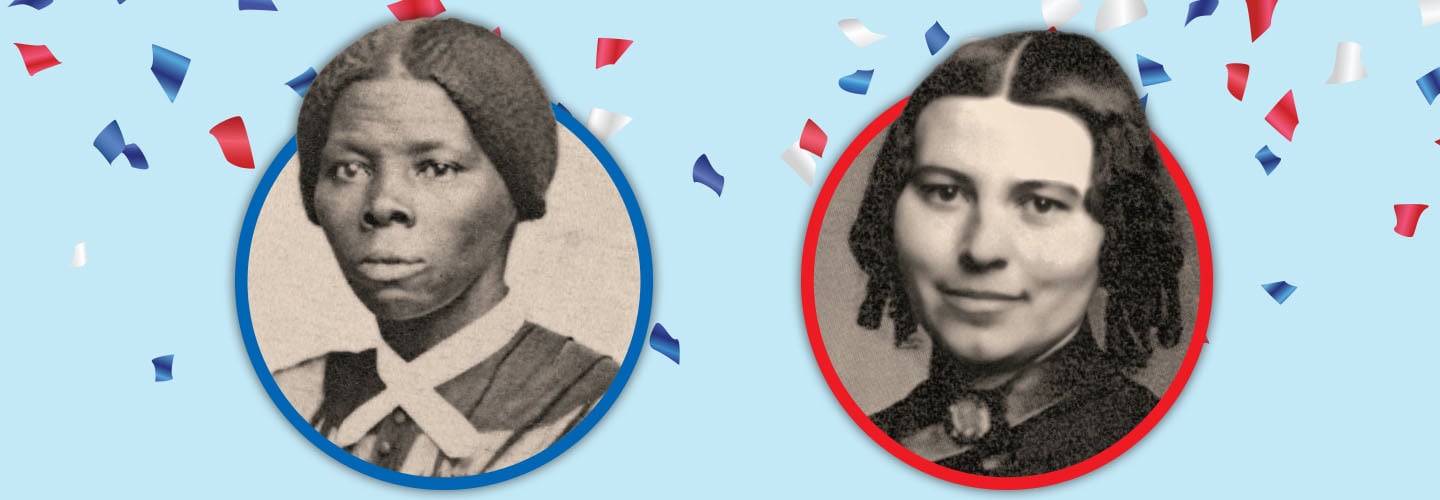
Heritage Art/Heritage Images via Getty Images (Tubman); Science History Images/Alamy Stock Photo (Barton); Shutterstock.com (confetti)

Women Who Shaped America
The Struggle for Women's Rights
Watch a video about the long fight for women’s rights.
Rosie the Riveter
Pictorial Press Ltd/Alamy Stock Photo
Rosie the Riveter
In the early 1940s, many men left their jobs to fight in World War II (1939-1945). The U.S. government wanted to encourage women to fill these roles. So it turned to a made-up character named Rosie the Riveter. (A riveter is someone who attaches sheets of metal using special pins called rivets.)
Soon millions of women entered the workforce. Many took jobs in factories. They built weapons, planes, and warships. Over time, these women became known as “Rosies.”
Today they’re honored at the Rosie the Riveter WWII Home Front National Historical Park. It is in Richmond, California.
Harold M. Lambert/Lambert/Getty Images
Women work in a factory during World War II.
Clara Barton
Science History Images/Alamy Stock Photo
Clara Barton
During the Civil War (1861-1865), states in the North and South battled each other. When the war began, Clara Barton was working in an office in Washington, D.C. She had no training as a nurse. But she helped deliver medical supplies. She cared for wounded soldiers too. Many called her the “Angel of the Battlefield.”
Barton later started the American Red Cross. She was its president for 23 years. Barton’s home in Glen Echo, Maryland, was the group’s first permanent headquarters. It’s now the Clara Barton National Historic Site. The Red Cross continues to help people affected by wars and disasters.
Jeffrey Isaac Greenberg 16+/Alamy Stock Photo
Harriet Tubman
Heritage Art/Heritage Images via Getty Images
Harriet Tubman
Harriet Tubman was born in Maryland in 1822. At the time, slavery was legal there. Tubman and other enslaved people had no rights. They were forced to work under brutal conditions and without pay. In 1849, Tubman escaped to freedom using the Underground Railroad. That was a secret network of people, routes, and hiding places. Tubman later risked her life to lead many others to freedom.
Two historical parks honor the famous abolitionist. One is in Church Creek, Maryland. Visitors can walk through the woods where Tubman escaped. The other includes a home in New York where Tubman lived.
Zachary Frank/Alamy Stock Photo
This statue honors Harriet Tubman.
1. Who were “Rosies” in U.S. history? What did they do?
2. What is an abolitionist? What actions did Harriet Tubman take as an abolitionist?
3. Why is Clara Barton called the “Angel of the Battlefield”?
videos
(2)
videos
(2)
Skills Sheets
(2)
Skills Sheets
(2)
Games
(1)
TEACHER SUPPORT
(1)
Text-to-Speech