
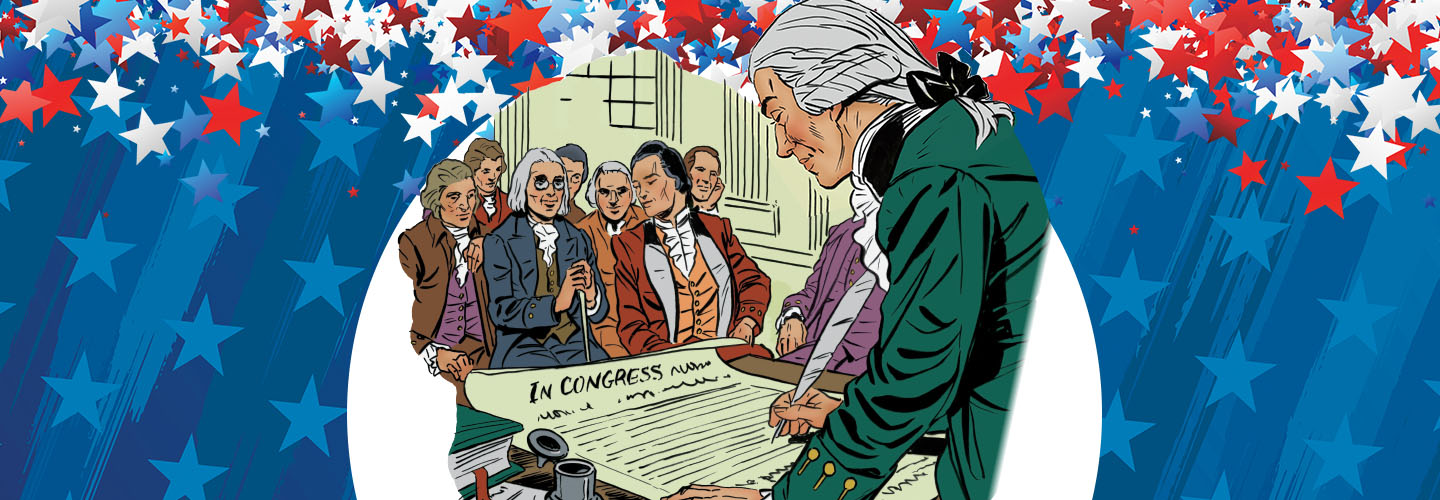

Illustration by Jonathan Carlson; Shutterstock.com (all other images)

Standards

Happy 250th Birthday,

U.S.A.!

The Declaration of Independence announced America’s freedom. It was signed 250 years ago.

As You Read, Think About: Why did many colonists want freedom from Great Britain?

The Declaration of Independence
Watch a video to see how the Declaration was born.

1. Why was the Declaration of Independence written?

In the early 1770s, the United States wasn’t yet a country. America was made up of 13 Colonies ruled by Great Britain. Many people in the colonies were furious at the British government. They wanted more say in laws that affected them.

So in April 1775, the colonists went to war with Great Britain. The war was called the American Revolution.

In May 1775, delegates from each colony gathered in Philadelphia, Pennsylvania. They met to discuss their next moves. Meanwhile, the war raged on. Colonists grew even angrier. Many wanted to form their own country.

In the early 1770s, the United States wasn’t a country yet. America was made up of 13 Colonies. They were ruled by Great Britain. Many people in the colonies were furious at the British government. They wanted more say in laws that affected them.

In April 1775, the colonists went to war with Great Britain. The war was called the American Revolution.

In May 1775, delegates from each colony got together. They met in Philadelphia, Pennsylvania. They planned their next moves. Meanwhile, the war raged on. Colonists grew angrier. Many wanted to start their own country.

13 Colonies (1776)

Jim McMahon/Mapman®

2. Who wrote the Declaration, and what did it say?

In June 1776, Thomas Jefferson wrote the first draft of the Declaration. Other delegates made some key changes to it.

The document said the colonists no longer wanted to be ruled by Great Britain. It also listed the reasons why.

“It’s the official statement that says we want to be our own nation,” explains Rebecca Franco. She works at the Museum of the American Revolution.

The document outlined Americans’ basic rights too. They include people’s right to do what makes them happy.

On July 2, the delegates voted to separate from Great Britain. Two days later, they officially approved the Declaration. That’s why we celebrate July 4 as Independence Day.

In June 1776, Thomas Jefferson wrote the first draft. Other delegates made some key changes to it.

The document said the colonists didn’t want to be ruled by Great Britain anymore. It listed the reasons why.

“It’s the official statement that says we want to be our own nation,” says Rebecca Franco. She works at the Museum of the American Revolution.

The document listed Americans’ basic rights too. They include people’s right to do what makes them happy.

On July 2, the delegates voted. They would separate from Great Britain. Two days later, they approved the Declaration. That’s why July 4 is Independence Day.

3. What happened next?

Messengers delivered copies of the Declaration throughout the colonies. It was read aloud in town squares. Many people celebrated. They lit bonfires and rang bells.

In 1783, the American Revolution ended. The colonists won! The United States was finally its own nation. And the Declaration paved the way for how the new country would be run.

Messengers carried copies of the Declaration around the colonies. It was read out loud in town squares. Many people cheered. They lit bonfires. They rang bells.

In 1783, the American Revolution ended. The colonists won! The United States was now its own nation. And the Declaration created a plan for how the new country would be run.

1. Why did the American Colonies go to war with Great Britain in 1775?

2. What does the Declaration of Independence say?

3. Share two facts you can learn from the map above.

1. Why did the American Colonies go to war with Great Britain in 1775?

2. What does the Declaration of Independence say?

3. Share two facts you can learn from the map above.

videos (2)
videos (2)
Skills Sheets (3)
Skills Sheets (3)
Skills Sheets (3)
Games (1)
TEACHER SUPPORT (1)
Leveled Articles (1)
Text-to-Speech